Specialties and Approach
I currently treat adults (18+) with the following concerns:
- PTSD
- Anxiety
- Panic Attacks
- Women’s Issues
- Grief & Loss
- Parenting
- Perinatal & post-partum
- Coping Skills
- Life Transitions
- Stress Management

My approach to therapy is guided by evidence-based treatment modalities including Eye Movement Desensitization & Reprocessing (EMDR), Cognitive Behavioral Therapy (CBT), Dialectical Behavior Therapy (DBT), and positive psychology.
EMDR
Eye Movement Desensitization and Reprocessing (EMDR) therapy is an extensively researched, effective psychotherapy method proven to help people recover from trauma and PTSD symptoms… "EMDR is a structured therapy that encourages the patient to briefly focus on the trauma memory while simultaneously experiencing bilateral stimulation (typically eye movements), which is associated with a reduction in the vividness and emotion associated with the trauma memories." To learn more about EMDR, visit EMDRIA.
CBT
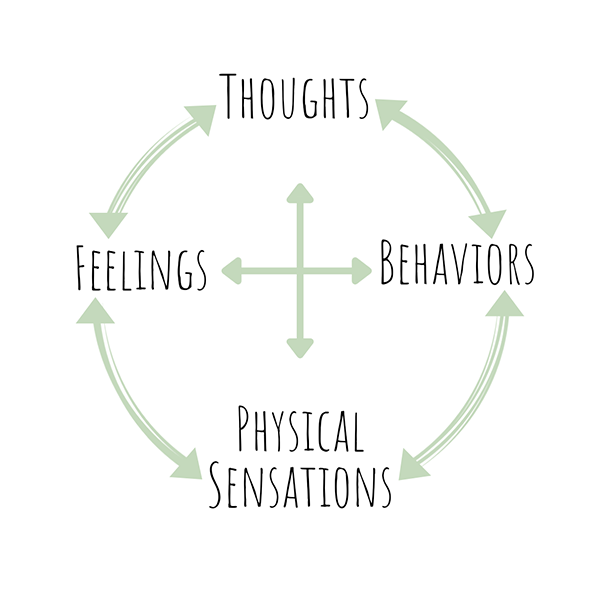
Cognitive Behavioral Therapy is designed to increase our awareness of our thoughts, feelings, behaviors, and physical sensations and understand their interconnectedness. With this insight, we can challenge what is no longer serving our wellbeing and make behavioral changes. To learn more about CBT, visit Cognitive Behavioral Therapy.

There is nothing either good or bad but thinking makes it so.— William Shakespeare
DBT
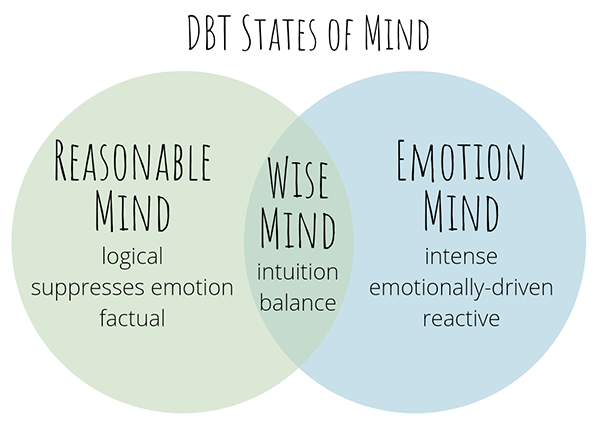
Dialectical Behavior Therapy teaches us to challenge absolutes and find balance. It is made up of four skill sets:
- Mindfulness- learn acceptance and staying in the present moment
- Distress Tolerance- strengthen your ability to tolerate distressing emotions
- Emotion Regulation- learn to manage intense emotions
- Interpersonal Effectiveness- improve relationships through healthy boundaries and assertive communication
To learn more about DBT, visit: Dialectical Behavior Therapy.
Positive Pschology
Right in the name, positive psychology focuses on your strengths and resiliency. Through gratitude practices and increasing positive emotions you can live a more meaningful and satisfying life. To learn more about positive psychology, visit Positive Psychology.
The question is not what you look at, but what you see.— Henry David Thoreau